


Food testing in the region still revolves around “legacy” contaminants that decide release, rejection, and recall discussions - veterinary drug residues, pesticide residues and fumigants, and toxic elements including species-sensitive forms, in different food matrices. This 3-part series is built for audiences where regulatory expectations reference Codex-based frameworks, country-specific legislative guidelines, and import/export-market requirements that influence testing scope, reporting limits, and confirmation criteria. Each webinar focuses on the analytical factors that drive outcomes: matrix effects and co-extractives, trace-level quantitation, transition/ion-ratio checks, interference control, and reportable result logic.
Keynote expert speakers will set the regulatory context, give a glimpse of the current trends, and future implications. Agilent workflow segments map these needs to sample preparation nuances, LC-MS/MS for multi-class residues, GC-MS/MS and headspace GC for residue/fumigant markers, and ICP-MS plus LC-ICP-MS for heavy metals and speciation, including QC structures and data review patterns used in high-throughput labs, to name a few.

When food meets the lab, LC-MS/MS tracks veterinary drug residues across seafood, dairy, and meat using confirmation checks that separate true residues from matrix effects.

When food meets the lab, one extract must answer two questions - pesticide residues across wide panels and fumigant markers such as ethylene oxide/2-CE and phosphine.

When food meets the lab, ICP-MS measures trace lead, cadmium, mercury and arsenic, while LC-ICP-MS reveals species profiles when total numbers do not tell the full story.
Veterinary drug residue monitoring increasingly demands broad coverage across classes (β-lactams, sulfonamides, tetracyclines, quinolones, macrolides, nitroimidazoles, chloramphenicol-type compounds and others) at low reporting levels in seafood, dairy and meat matrices. Regulatory context spans Codex-oriented residue frameworks and national controls such as residue provisions under EU and FSSAI, with additional buyer-driven lists and decision rules influencing what labs must report. This session also focuses on the LC-MS/MS methods for multi-class screening and confirmation.

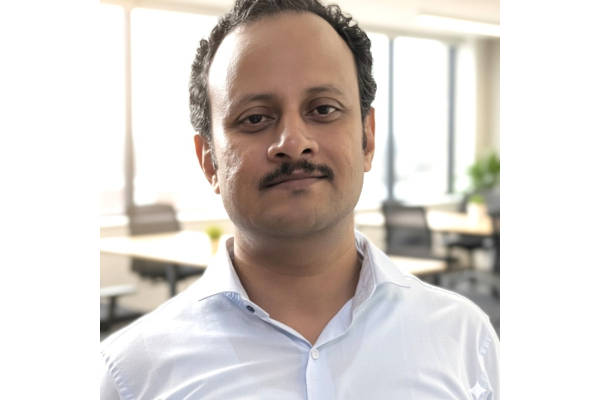
Mr. Abhishek Kundu
Application Engineer
Agilent Technologies, India
Dr. Prasanth Joseph
Application Engineer, LC/MS
Agilent Technologies, India
Pesticide residue testing is shaped by Codex/EU-aligned expectations that frequently drive import decisions, while fumigant markers remain high-scrutiny topics for ingredients and finished foods, especially in spice, grain, seed, and produce supply chains. This webinar connects the regulatory context to method choices and result interpretation: broad-scope multi-residue coverage versus matrix complexity, QuEChERS-based extraction and cleanup, split-platform workflows (LC-MS/MS and GC-MS/MS). For fumigants, the focus includes sample handling for volatility, targeted measurement approaches for ethylene oxide/2-CE and phosphine-related testing where relevant, and reporting pitfalls that trigger disputes.
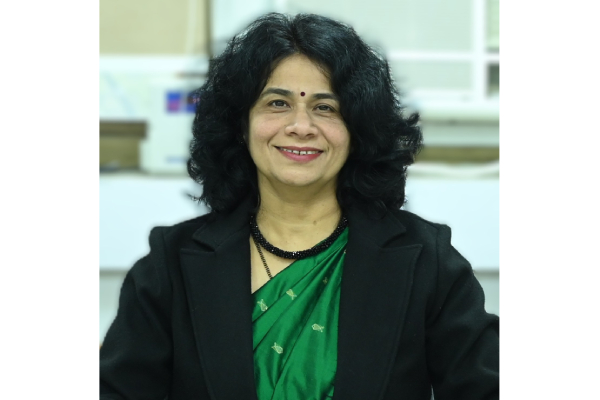
Dr. Vandana Tripathy
Principal Scientist & Network Coordinator, AINP on Pesticide Residues
ICAR-IARI; FSSAI Scientific Panel on Pesticide Residues, India

Dr. Yu-Feng Zhang
Application Engineer
Agilent Technologies, Singapore
Toxic element testing continues to be a core requirement due to national contaminant limits and trade-facing specifications for Pb, Cd, Hg, As and related elements. This webinar separates total-element panels from speciation cases where chemical form affects interpretation, particularly arsenic species in rice/cereal products and marine foods. The session covers digestion strategy, contamination control, reagent blank behavior, and trace-level drivers of data quality: polyatomic/isobaric interference removal, drift control, internal standards, calibration verification, and batch acceptance logic. Speciation discussion includes species-preserving extraction, chromatographic separation choices, prevention of species interconversion, and interpretation of species profiles under matrix load.
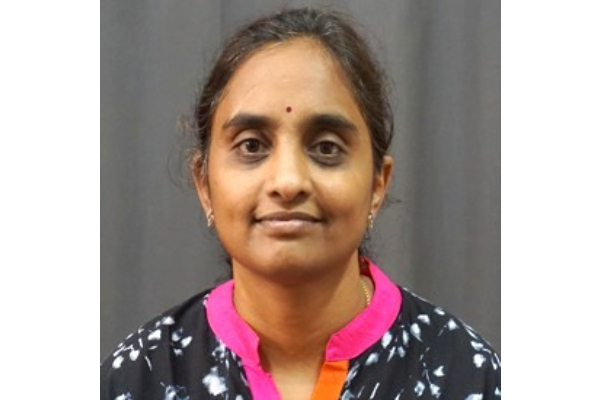
Dr. Usharani Dandamudi
Senior Principal Scientist, FS & AQCL
CSIR-Central Food Technological Research Institute (CFTRI), India

Dr. Vinay Jain
Application Engineer,
Agilent Technologies, India