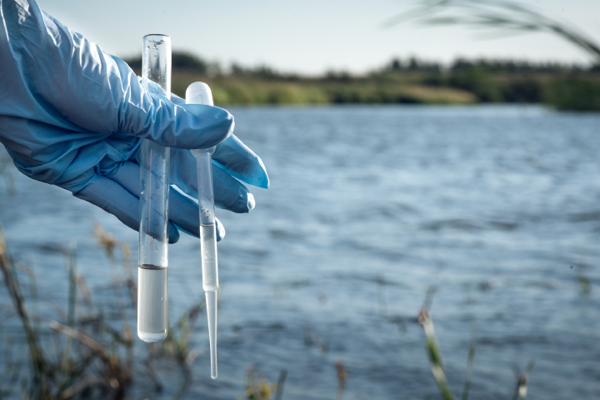


PFAS & Our Planet is a webinar series on PFAS testing in environmental samples, food and food contact materials, textiles and other materials. Alongside the laboratory and regulatory lens, the series addresses the broader planetary impact of PFAS, including their persistence and movement through water, soil, air, food systems, and materials. It brings together what laboratories and industry need to understand now: where PFAS rules are heading, which sample types are under increasing focus, what needs to be measured, and how those needs translate into method selection, workflow setup, and result reporting.
Who Should Attend: Environmental and water testing laboratories, food testing laboratories, food contact material and packaging laboratories, textile and materials testing laboratories, contract testing laboratories, public sector and regulatory laboratories, manufacturers of food, packaging, textiles, and consumer goods, quality, product safety, regulatory affairs, and sustainability functions, and research laboratories working on PFAS analysis.
Recommended for: Analytical chemists, laboratory managers, QA/QC managers, regulatory affairs managers, food safety and product safety managers, environmental scientists, packaging and food contact materials specialists, textile and materials testing leads, sustainability and product stewardship managers, validation and method development scientists, and technical leaders in contract, public sector, and research laboratories.
Regulatory context covered: EU and U.S. PFAS developments, food contact and packaging measures, environmental monitoring frameworks, OEKO-TEX requirements for textiles and materials, Singapore’s food and water surveillance activity, India’s draft PFAS-related packaging amendment, and emerging movement in parts of Southeast Asia like Thailand, Malaysia, Vietnam, Indonesia, Bangladesh and Philippines.
We appreciate your time and value your information provided to us.
PFAS monitoring in water, soil, and air is moving into a stricter phase as regulators place more focus on drinking water, groundwater, wastewater, surface water, and contaminated land. This session will cover the main reference points shaping that shift, including the EU Drinking Water Directive, the U.S. EPA drinking water framework, the broader EU REACH PFAS restriction process, and environmental guidance such as Australia’s PFAS National Environmental Management Plan.
It will then move into the laboratory workflow for environmental matrices, covering contamination control, blanks strategy, sample preparation and cleanup, targeted LC/MS/MS for non-volatile PFAS, wider screening where needed, and reporting approaches suited to monitoring and site assessment.

Jamie Fox
Technical Sales Director and PFAS Practice Leader
SGS, Environment, Health and Safety (North America), USA

Courtney Milner, Ph.D.
Product Specialist
Agilent Technologies, Australia
PFAS in food systems is under greater scrutiny due to both environmental transfer into food and migration from food contact materials. This session will cover major regulatory reference points including the EU food contact materials framework, the EU plastics regulation, the newer EU Packaging and Packaging Waste Regulation, and recent U.S. FDA action on PFAS food-contact uses. Regional framing will also include Singapore’s active PFAS food surveillance and testing capability and India’s draft FSSAI packaging amendment on PFAS in food contact materials, showing how the direction of travel is becoming clearer in this part of the world.
The technical section will cover food and packaging workflows from extraction and cleanup to targeted LC/MS/MS for non-volatile PFAS, broader screening where required, contamination control for low-level work, and reporting formats suited to product review and cross-border supply chains. For Southeast Asia, the session will also note that movement is emerging in markets such as Thailand and Vietnam, even where the regulatory picture is still developing.

Thomas Gude, Ph.D.
Founder, Thomas Gude GmbH
President, Swiss Society for Food Chemistry
President, AOAC Europe Section

Chris Fouracre, Ph.D.
Product Specialist
Agilent Technologies, Australia
Textiles and treated materials are facing stronger PFAS scrutiny as product restrictions widen and supply chains are asked to verify material content more clearly. This session will cover the main external reference points shaping that shift, including the EU REACH PFAS restriction process and OEKO-TEX requirements, which have become highly relevant for textile and material suppliers serving global brands.
It will then step into the laboratory workflow for textiles and related materials, covering extraction and cleanup, targeted LC/MS/MS for non-volatile PFAS, selected GC/MS/MS approaches for volatile PFAS where relevant, contamination control, and reporting formats suited to product verification. Regional context will be framed around export-market pull, buyer specifications, and certification-driven testing, which are often the main drivers for suppliers in South and Southeast Asia.

David Saladin
Ecology Lab Team Leader
TESTEX AG, Swiss Textile Testing Institute

Aimei Zou, Ph.D.
Application Scientist
Agilent Technologies, Singapore