

Join Agilent at the Gulf Coast Conference 2024

Agilent is a continued, proud Gold Sponsor at the Gulf Coast Conference 2024. Join us in the main Exhibit Hall at Booth 503 for two days and in our workshop sessions in Floral Hall 1A where presenters will share application papers on the latest applications and technological advancements in the energy and chemical industry.
We are also excited to be a part of the New Product Showcase showcasing the Agilent 8850 GC system! Be sure to stop by the Showcase area on Tuesday and Wednesday to take a look.
The Gulf Coast Conference is a non-profit organization oriented toward the education and advancement of knowledge of Chemical Analysis Technology associated with the Petrochemical, Refining, and Environmental fields, and will forward this goal through annual technical meetings, regular communications, and training courses focused on these fields.
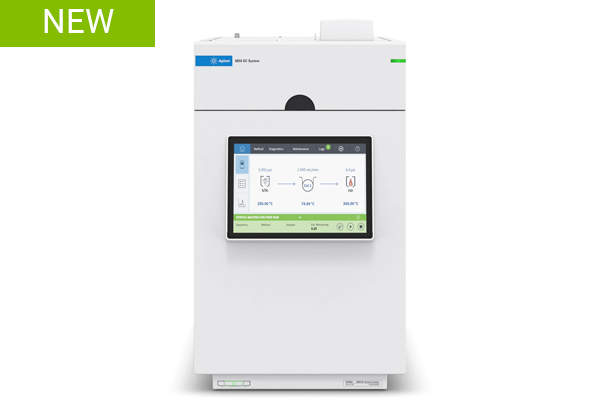
8850 GC System
The intelligent, single-channel 8850 Gas Chromatograph (GC) System is the smallest high-performance benchtop GC on the market. With a footprint about half that of traditional instruments, you can have two 8850 GCs running simultaneously without sacrificing valuable bench space. Based on 6850 and 8890 GC technology, it uses the same inlets, detectors, and EPC as the 8890 to deliver equivalent analytical results.
This energy-efficient GC has a compact oven for fast thermal cycling and uses up to 30% less power than a standard GC, which can help you meet your sustainability goals. Built-in diagnostics, troubleshooting, and ease-of-maintenance can optimize uptime and sample throughput.
Abstract # 174 - Paper
Getting More – or Less – from Intelligent Reports
Kathleen O'Dea, Pre-Sales Application Engineer, Agilent Technologies, Inc.
Tom Short, Informatics Product Specialist, Agilent Technologies, Inc.
Reporting in a chromatography data system has a variety of audiences. Some are human, and some are programs – such as a LIMS parser. Creating reports targeted to their specific audiences calls for an intelligent reporting engine. A human reviewer requires a more visually appealing report layout including company logos, chromatogram snippets focused on areas of interest, Summarized and color coded indications the pass / fail criteria. A programmatic report consumer requires something entirely different – attractive visual elements such as graphics, colors, lines or boarders around tables can make parsing reports more difficult. A parser may require a particular separator for result values, or a coded label for a particular piece of metadata.
OpenLab CDS’s Intelligent Reporter provides users the flexibility to produce reports targeted to a specific audience – whether human or machine.
Abstract # 175 - Paper
Digital Lab Innovations: Enhancing Data Access and IoT Integration with OpenLab
Ian Eisele, Informatics Application Scientist, Agilent Technologies, Inc.
Unlock new levels of data utilization and operational efficiency with two of the latest advancements in laboratory technology from Agilent. First, the Data Access Tool transforms chromatography results from OpenLab CDS into a relational database, allowing direct integration with off-the-shelf data analytics software. This open format connection to your data unlocks deeper insights and maximizes the value of your data, empowering more informed decision-making. Next-up, the Agilent Connected Instrument Device offers turn-key IoT deployment, remote management, and cloud connectivity, enhancing the management of your OpenLab deployments. Through the Agilent CID Hub, your entire fleet of AICs can be managed from a centralized dashboard, greatly reducing the burden on IT with software updates, troubleshooting, and operational continuity. Build your digital lab today with Agilent.
Abstract # 192 - Paper
A practical HS-GC/MSD method translation on the quantification of Ethylene oxide and 1,4-dioxane using HydroInert Ion Source and hydrogen carrier gas.
Felipe Chagas, Field Service Representative Expert, Agilent Technologies, Inc.
Britney H. Prestridge, Ph.D., britney.hebert@us.indorama.net, Indorama Ventures: Indovinya
Countless laboratories have been impacted by the difficulty to obtain new Helium tanks and by their elevated costs. For several decades, Helium has been selected as the best carrier for gas chromatographs with mass spectrometers (GC/MSD), especially, because of its unique inertness and separation performance. Considering the helium shortage, hydrogen has been used as a carrier gas substitute, however, on conventional GC/MS ion sources, this new carrier can negatively impact the baseline noise, loose sensitivity, cause reactivity, and reduce the quality of library search matching. Agilent Technologies introduced the new HydroInert ion source, specially designed to overcome all implications of hydrogen usage, providing better and more reliable results. A practical method translation to detect EO (ethylene oxide) and 1,4-dioxane was developed by Indorama Ventures in Woodlands, showing the performance of the new HydroInert ion source on daily operation. The 5977C GC/MSD equipped with a Pal 3 headspace and Hydroinert source, was able to successfully measure at a limit of quantification (LOQ) of 40ppb without substituting for sensitivity or linearity as compared to a Helium GCMS system.
Abstract # 189 - Paper
Aromatic Hydrocarbon Purity Analysis by ASTM D7504 with the Agilent 8850 GC
Scott Hoy, Applications Chemist - GC , Agilent Technologies, Inc.
The new Agilent 8850 GC combines the small formfactor of the classic 6850 GC with the modern technologies driving Agilent’s full-size 8890 GC to yield a single powerful chromatographic channel that is an excellent solution for ASTM D7504. This presentation will demonstrate the performance of the 8850 GC with D7504 through a conventional 40-minute separation using helium carrier gas and a faster 6-minute separation using hydrogen. Both approaches yielded outstanding precision and chromatographic performance when applied to benzene, toluene, and p-xylene standards. Method acceleration using the Agilent method translator and tips for using the Early Maintenance Feedback counters to increase instrument uptime will also be discussed.
Abstract # 172 - Paper
Analysis of Trace Metals in Neat 1-Methyl -2- Pyrrolidone (NMP) using the Agilent 5800 ICP-OES System
Paul Krampitz, Application Scientist, Agilent Technologies, Inc.
NMP is a versatile polar solvent and has been used in many different industries and applications. Of its many uses, some of the main applications are in the petrochemical industry to recover 1,3 butadiene and acetylene during the processing of petrochemicals. Lithium ion battery fabrication uses NMP to dissolve the polyvinylidene difluoride (PVDF) binder from the electrode to allow the PVDF to evenly coat the electrode. NMP is an excellent dispersant for this industry. NMP is also used widely in the semiconductor industry as a degreaser, photoresist stripper and to treat phenolic die coat resins. Different grades of NMP require different techniques for analysis. For example, SP and semiconductor grade NMP require contaminants to be under 50 ppt for 32 certified metals. This application requires, ideally, an Agilent ICPMS Triple Quadrupole to reach these levels. However electronic grade NMP has a specification of 50 ppb maximum, levels that can be reached using the Agilent 5800 ICP-OES system.
This application will take advantage of the 5800s ability to run NMP without dilution (neat) to improve the overall detectability coupled with removing the structured background of the solvent, resulting in higher S/N ratios and lower detection limits. Paper with include setup, parameters, an MDL study, long term stability study and spike recoveries of known intermediate standards.
Abstract # 173 - Paper
Elemental Analysis in Jet Fuel by direct injection with Inductively Coupled Plasma-Mass Spectrometry (ICP-MS)
Yan Cheung, Application Scientist ICP-MS, Agilent Technologies, Inc.
Quality control of jet fuel is important for many reasons, engine protection, environmental concerns, especially safety. Currently testing labs use various analytical techniques for elemental analysis in jet fuel. As the regulations for metal contaminants require lower limits, advance analytical techniques for elemental analysis become more important. This presentation will showcase direct injection of jet fuel in ICP-MS without any sample preparations for elemental analysis, with detection limits in parts-per-billion levels. The instrumentation setup and sample results will be discussed in this presentation.
Abstract # 177 - Paper
Advancements in Automation for ICP-OES and ICP-MS in High Throughput Laboratories
Mark Kelinske, ICP-MS Product Specialist, Agilent Technologies, Inc.
Modern analytical laboratories are implementing automation workflows to gain efficiencies in throughput, improve methodologies, and reduced labor and overhead costs. In this session, a new automation accessory for ICP-MS and ICP-OES will be presented. This new automation workflow adds capabilities such as calibration curve preparation from a single stock solution, automated sample dilution prior to analysis, and reactive dilution to re-measure over-ranged samples real time. These capabilities significantly reduce post-analysis rework, manual dilution errors of samples, and improve accuracy and precision of the calibration. We will walk through the automation flow path and discuss how the workflow compliments existing Agilent atomic technologies.
Abstract # 179 - Paper
IC-MS Analysis of Perchlorate in Drinking Water
Sue D’Antonio, Application Chemist, Agilent Technologies, Inc.
In this talk we will present the Agilent/Metrohm solution for Perchlorate in Wastewater. Using IC MS we can achieve 0.1 ppb level of perchlorate in water. An overview of the technology and data of real samples will be presented.
Abstract # 188 - Paper
ASTM D8396 Using the Agilent Reverse Flow Modulator – Achieving Long-Term Success with Practical GCxGC
Scott Hoy, Applications Chemist - GC, Agilent Technologies, Inc.
The adoption of ASTM D8396 signals the arrival of routine GCxGC analysis in the petrochemical QC laboratory. Agilent’s Reverse Flow Modulator (RFM) is a low-cost and cryogen-free GCxGC solution with the high retention precision necessary for practical GCxGC. This presentation will demonstrate the application of the Agilent RFM GCxGC system to ASTM D8396 and compare several conventional aviation turbine fuels, synthetic aviation turbine fuels (SATF), finished diesel, and FAMEs using a single GCxGC-FID instrument configuration. Figures of merit, method tuning, and other considerations for long-term success with D8396 and future GCxGC methods will also be explored.
Abstract # 190 - Paper
Overview of Current Methods for Analyzing Trace Impurities in Hydrogen Fuel by Gas Chromatography.
Shannon Coleman, GC Application Scientist, Agilent Technologies
Hydrogen (H2) is the simplest and most abundant element in the universe. It can be produced without a carbon footprint from variety of sources, including natural gas, coal, biomass, waste materials, or by splitting water molecules. There has been a growing interest in its use as an energy source across the economy. As hydrogen is increasingly adopted, strict requirements have been imposed to limit poisoning effects on fuel cell catalyst and environmental pollution. In this presentation we will discuss Agilent’s current gas chromatography solutions to analyzing trace level impurities in hydrogen.
Abstract # 191 - Paper
8850 GC Hands On Demo
Felipe Chagas, Field Service Engineer, Agilent Technologies, Inc.
Please join us for a hand-on demo of the NEW 8850 GC System.
Learn more about Agilent solutions to optimize production across the petroleum products value chain and we will see you soon at the Gulf Coast Conference!