Agilent at the 37th European Congress of Pathology 2025

We’re proud to participate as a premium sponsor at the 37th European Congress of Pathology (ECP), taking place from 6 to 10 September 2025 in Vienna, Austria.
Join us at booth 18, Hall X5 in the Austria Center Vienna and take part in exclusive on-site activities.
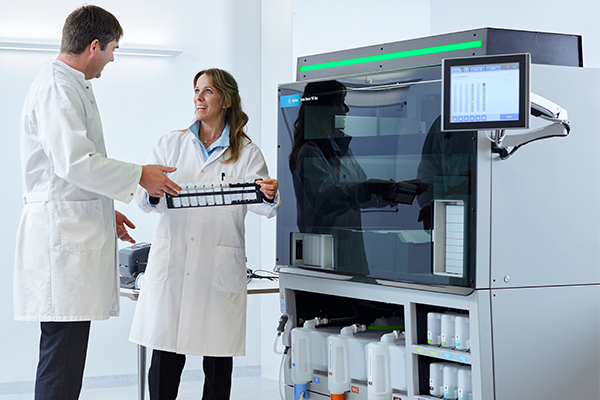
Visit our booth to experience one of the members of the new family and to have a live demo! Introducing this family of instruments, Agilent offers a flexible and scalable solution for IHC, CDx, and ISH that fits every pathology lab. As your lab successfully grows over time, you can pick any combination of instruments that match your new needs.
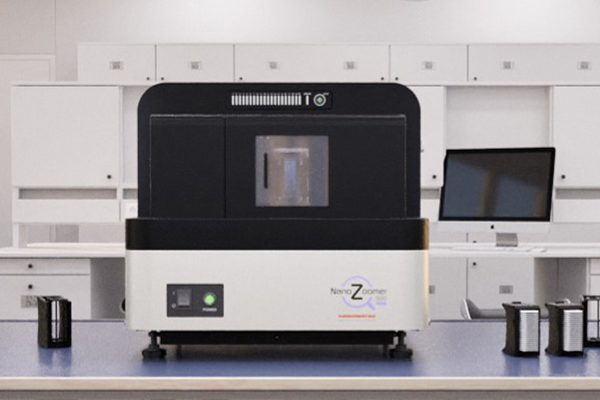
Stop by our booth to discover the NanoZoomer® S20MD high-speed slide scanner in action and explore how it can boost your pathology lab’s productivity. While you’re there, don’t miss a hands-on demo of Concentriq AP-Dx, a powerful and intuitive digital pathology software designed to streamline workflows and enhance user experience.
Visit our PD-L1 educational area to boost your PD-L1 interpretation skills. While you're there, explore the Agilent CDx Education Portal—a rich hub of online training, webinars, and expert resources, including our new podcast series. Don’t miss the opportunity to gain key insights from our scientific poster presentations.
Short digital PD-L1 training programs are available at the booth to increase your PD-L1 interpretation skills.
New for 2025: Tackle the Challenging Case of the Day and have a chance to be named Today’s Sharpest Pathologist!
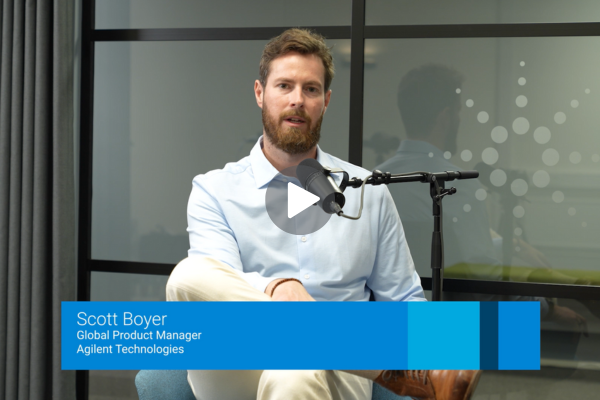
In this new series, Agilent brings together leading pathologists, oncologists, and CDx specialists to discuss real-world challenges and solutions in companion diagnostics. Visit our booth to listen and discover expert insights shaping the future of CDx.
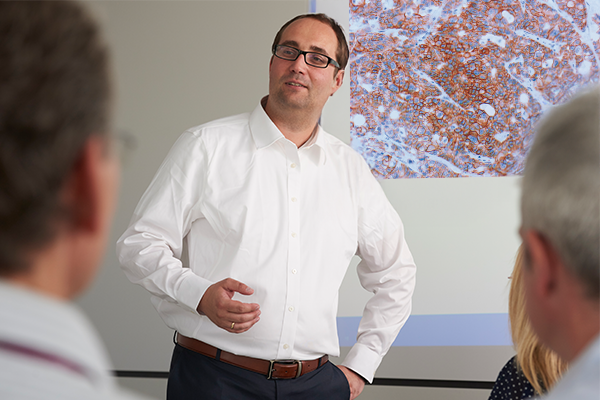
Come listen to our poster presentations about PD-L1, comparison studies, block stability, and digital WSI scoring. For an even deeper discussion tailored to your interests, visit our booth for a personalized one-to-one presentation.
Title: Importance of the Quality of Stain, Optimized Workflow, and a Modern Digital Ecosystem
Teaser: Pathology laboratories are adopting new technologies and workflows to produce faster results with greater accuracy, supporting diagnosis and improving patient outcomes. During this seminar, you will:
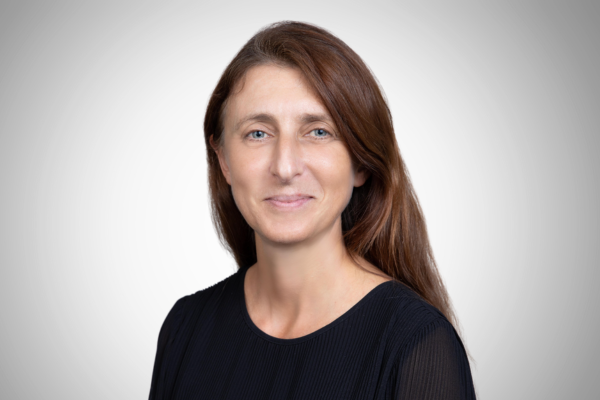
Rita Shaknovich, Chief Medical Officer, Medical Affairs, Agilent Technologies
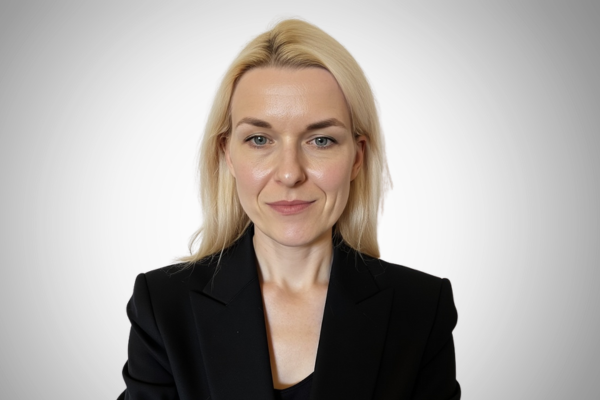
Dr. Kristi Bøgh Anderson, Pathologist and Scientific Associate, NordiQC
Dr. Bilal Ahmad, Chair, Digital Pathology Innovation & Compliance Committee (DPICC), Spectrum Healthcare Partners
Title: From Biopsy to Bedside: Integrating Diagnosis, Treatment, and Quality in Gastric Cancer
Abstract: Gastric cancer remains a complex and heterogeneous disease, demanding a multidisciplinary approach to optimize patient outcomes. From Biopsy to Bedside: Integrating Diagnosis, Treatment, and Quality in Gastric Cancer explores the pivotal role of pathology in the multidisciplinary management of gastric cancer. This session will present real-world patient cases to illustrate how the interpretation of key biomarkers—HER2, PD-L1, MMR, and others—directly informs therapeutic decisions in accordance with evolving clinical guidelines.
The presentation will be structured around three core perspectives: clinical, diagnostic, and quality (EQA).
We will emphasize the responsibility of the pathologist not only in accurate biomarker assessment but also in ensuring diagnostic consistency and quality that underpin effective treatment planning. As precision oncology advances, the pathologist becomes a central figure in translating molecular insights into actionable clinical strategies in gastric cancer.
Key learning objectives:
Scheme Director of UK NEQAS for Immunocytochemistry and In-Situ Hybridisation
MD, PhD, Medical Oncology Department, Hospital Clínico Universitario de Valencia-INCLIVA
Visit Agilent at booth 18, Hall X5 for our Meet the Expert sessions to discover our future strategy and the latest additions to our portfolio. Learn from our IHC experts how to manage your daily workload more efficiently, improve cost-effectiveness, and deliver timely, accurate results to patients.
Abstract: Agilent’s approach to ensuring IHC staining quality: how the staining quality of the Dako Omnis compares to market expectations, and an outlook on how Agilent is evolving the staining menu.
Speaker: Esben Pedersen, PhD, Senior Global Product Manager IHC and ISH reagents, Agilent Technologies
About our speaker: Biologist MSc with a PhD in Experimental Pathology from the University of Copenhagen. Global Product Manager with over 10 years of experience in clinical IHC and ISH, spanning both R&D and commercial roles.
Abstract: Insights from real life case studies show increased throughput with fewer instruments and less hands-on time, and at the same time providing a faster and continuous delivery of complete patient cases to the pathologists for diagnosis.
Speaker: Peter Vermaire, Team Leader EMEA Workflow Specialists, Agilent Technologies
About our speaker: Workflow Specialist with a background in pathology and over 10 years of experience leading workflow projects across Europe.
D0133583_2.00
Abstract: Agilent Technologies is a global leader in life sciences and diagnostics, with a strong focus on cancer care. As a pioneer in pathology and companion diagnostics (CDx), Agilent delivers innovative solutions that support accurate, timely diagnoses.
Our expanding portfolio includes flexible platforms like the Dako Omnis family and cutting-edge digital pathology tools, designed to meet the diverse needs of modern labs.
Driven by a “Customer First” philosophy, Agilent’s Medical Affairs team plays a key role in providing scientific updates, education, and expert support—empowering healthcare professionals and advancing personalized medicine.
Dr. Shaknovich is a physician-scientist with over 20 years of leadership experience in academia and the biomedical industry. She began her career in pathology and led a basic science laboratory at Weill Cornell Medical Center in New York, where her research focused on the mechanisms of epigenetic deregulation in cancer. She later served as Chief Medical Officer at Cancer Genetics and as Head of Clinical Laboratories at GRAIL, where she played a key role in the development and launch of the first-in-class Multi-Cancer Early Detection (MCED) test. In December 2024, Dr. Shaknovich joined Agilent Technologies as Chief Medical Officer of the Life Sciences and Diagnostics Group, where she leads the Medical team and contributes to advancing the company’s strategy and leadership in the biomedical field.
Abstract: Immunohistochemistry (IHC) has for decades been an indispensable and central method in pathology applied to gain diagnostic, prognostic, and predictive information. However, the multimodality of IHC and challenge to make the right choices within the analytical phase for IHC can compromise the reproducibility and validity of IHC. This issue has been documented by the Nordic immunohistochemical Quality Control (NordiQC) proficiency program for IHC with more than 700 registered participants. The presentation will describe the working principles of NordiQC and highlight the lessons learned to achieve and maintain high quality “Precision IHC Testing for Precision Diagnostics. The impact from the selection of antibodies, the need of calibration of IHC assays, pros and cons of control materials will be discussed and anchored on the vital concept, that IHC assays must be developed, validated and applied as “Fit-For-Purpose”.
Dr. Kristi Bøgh Anderson is a pathologist with a medical degree from the University of Tartu, Estonia and a pathology specialization from Aalborg University Hospital in Denmark. She currently serves as a scientific associate and PhD fellow at the Nordic Immunohistochemical Quality Control (NordiQC) program. NordiQC is an international external quality assessment (EQA) program for diagnostic pathology laboratories, certified under ISO 17043. In her role, she is an assessor for the general, breast and companion diagnostic modules. Dr. Kristi Bøgh Anderson in cooperation with NordiQC colleagues is also involved in different scientific projects to provide technical, educational and consultancy services to pathology laboratories and industry partners worldwide. At present about 700 participants from more than 60 countries are registered in the NordiQC EQA program.
The session explores how Digital Pathology 2.0 should break adoption barriers in routine practice. The speaker will share implementation learnings from live deployments, including seamless scanning‑to‑report-generation pipelines, AI‑augmented quality control, and vendor‑neutral integration strategies critical for sustainable adoption. Attendees will gain tangible best practices for driving interoperability across systems and enabling Next-Gen-AI‑powered (LLMs, Agents) reporting that aims to enhance diagnostic accuracy, streamline workflows, and deliver measurable lab efficiencies. Framing these lessons in the context of mature real‑world adoption, this talk bridges cutting‑edge research with actionable outcomes.
Dr. Bilal Ahmad, MD, MBA, FCAP is Chair of the Digital Pathology Innovation and Compliance Committee (DPICC) at Spectrum Healthcare Partners. A board-certified hematopathologist with over a decade of experience, Dr. Ahmad combines clinical expertise with business acumen, holding an MBA and a track record of operational leadership across multi-hospital systems.
He has spearheaded transformative initiatives in digital pathology, including the deployment of live microscopy for intraoperative evaluation, strategic digitization of slide workflows to optimize remote staffing, and the integration of AI tools to enhance diagnostic precision. Dr. Ahmad is deeply committed to leveraging technology to expand access, improve efficiency, and bring flexibility to pathology practice. Nationally, he serves as the Maine state Chair of the House of Delegates and as a member of the Digital and Computational Pathology Committee for the College of American Pathologists, where he advocates for the profession and contributes to shaping its future.
Authors: Greg Cherryholmes and Deanna Moquin, Grant Toland, Siena Tabuena-Frolli, Kristopher Kersch, Stephanie Hund, Monika Polewski
Authors: Charlotte Roach, Jeanette Musser, Siena Tabuena Frolli, Stephanie Hund, Karina Kulangara
Authors: Ryan J. Marczak, Skye Douglas, Emily Nichols, Siena Tabuena-Frolli, Kristopher Kersch, Francisco Ponce, Kelly Martyniuk
Authors: S. Kapucija, J. Christian, J. Gutierrez, N. Lapointe, V. Tanna, T. Okouneva, S. Alvarez, J. Berndt, K. Borgert, V. Parimi, P. Cronin, E. Oroudjev
Tania Fleitas Kanonnikoff, MD, PhD, is a medical oncologist specialised in gastro-oesophageal cancer, and a researcher at the University Hospital of Valencia, INCLIVA, Spain. She has a broad background in digestive tumours, with specific training and expertise in gastro-oesophageal tumours. Dr. Fleitas Kanonnikoff trained at the Hospital Clínico y Universitario La Fe de Valencia (2008). In 2011, she completed her PhD programme in medicine at the Universidad Autónoma de Barcelona with honours; since then, she has worked as a medical oncologist and researcher at the Hospital Clínico Universitario de Valencia, INCLIVA Biomedical Research Institute. She is also a member of the Ethics Committee of the Hospital Clínico Universitario de Valencia and an expert project evaluator for the European Union Commission. Her clinical work focuses on patient care and includes collaboration both as principal investigator (PI) and sub-investigator in clinical trials with a personalised medicine approach. Moreover, her research work focuses on the study of the tumour immune microenvironment of gastric cancers as PI and emergent researcher supported by the Carlos III Institute of Health, Spain. She stands out in her research experience following her 1-year fellowship (2016) at the Adam Bass Laboratory, Dana-Farber Cancer Institute, Boston. MA, USA where she undertook a project on gastric cancer immune characterisation. In addition, she is the scientific coordinator of the European LEGACy Project, developed by an international consortium, investigating the multi-omic characterisation of gastric cancer as well as strategies in the three levels of prevention, which includes dissemination and engagement strategies for researchers, patients and the general public in Europe and Latin America. She has also led other international projects directed at implementing precision medicine and electronical clinical reports at public oncology hospitals in Paraguay (2015-2018). Dr. Fleitas Kanonnikoff mentors PhD students and oncology fellows, mainly on aspects related to her line of research. She has published articles as first author, collaborator and senior author in first quartile journals and has presented her work at prestigious national and international conferences. She also volunteers as a reviewer for first quartile journals. She has been a member of the ESMO Faculty since January 2021, and a member of the ESMO Educational Publications Working Group since January 2022. Tania Fleitas Kanonnikoff holds a Doctorate in Medicine and Surgery from the University of Asunción, Paraguay (2002), and is a specialist in Medical Oncology from the Hospital Clínico y Universitario La Fe in Valencia (2008). PhD in Medicine from the Autonomous University of Barcelona (2011). Since then, she has been working as a medical oncologist and researcher at the Hospital Clínico Universitario de Valencia, INCLIVA Biomedical Research Institute. Her clinical work focuses on the care of patients with digestive tumors, particularly esophagogastric tumors, and she collaborates in the development of experimental therapies within clinical trials with a personalized medicine approach. Additionally, she leads her own research group focused on understanding the biology, tumor microenvironment, microbiome, and resistance mechanisms of esophagogastric tumors, developing various lines of research supported by public and private funding. The research group she leads is multidisciplinary, comprising oncologists, pathologists, gastroenterologists, surgeons, biologists, biochemists, bioinformaticians, and technicians. Notably, her research experience includes a postdoctoral stay in Adam Bass’s laboratory at DFCI, Boston, Massachusetts, for one year (2016), which allowed her to strengthen methodologies centered on characterizing the immune profile of gastric cancer. She is also the scientific coordinator of the European LEGACy Project, focused on the multi-omic characterization of gastric cancer, and the principal investigator of the European AIDA Project, focused on developing an artificial intelligence assistant applied to gastric cancer prevention strategies. Tania Fleitas has published original articles and reviews in high-impact journals. She is a co-author of the ESMO clinical guidelines on gastric cancer and the SEOM guidelines, and she is an evaluator of European projects.
Dr. Federico Rojo (MD, PhD) is a Senior Physician in Pathology at Fundación Jiménez Díaz (FJD) University Hospital in Madrid since 2007, where he is also the leader of the Molecular Pathology Laboratory and the Head of the Pathology Department. He is the Head of the Research Breast Cancer Group, Coordinator of the Cancer Research Area and Scientific Director of the Biobank at the Biomedical Research Institute of the same institution, IIS-FJD. Since 2010, he is also the president of the pathologist group at Spanish Breast Cancer Research Group, GEICAM, and member of GEICAM´s Steering Committee. Since 2017, Dr. Rojo develops the role of Secretary of the Spanish Society of Pathology, SEAP. He completed his training as a medical resident in Pathology between 1995 and 1998 in Hospital Vall d’Hebron, Barcelona, where he conducted his PhD in Molecular Biology in Cancer for 7 years. He enjoyed an international stay during this period at the MD Anderson Cancer Center in Texas. As a researcher, Dr. Rojo has been involved in a total of 25 competitive projects (all in oncology, primarily breast cancer), being Principal Investigator; 2 of these projects have been supported by the European Commission. He is involved in different national networks of cancer, such as RECTICS, CIBER and the Biobank Platform, where he is a Principal Investigator. Dr. Rojo has published a total of 233 peer-reviewed works in indexed scientific journals related to cancer and biomarkers, in addition to 11 scientific book chapters and 452 presentations at national and international meetings, including the Annual Meeting of the American Society of Clinical Oncology (ASCO) or the European Society of Medical Oncology (ESMO).
Andrew Dodson started his career in the Histopathology Department of St. George's Hospital, London, where he trained as a Biomedical Scientist and also subsequently worked in clinical research for the British Heart Foundation. He moved to Liverpool in 1990, and to the Royal Liverpool University Hospital in 1996, where he ran the Immunocytochemistry Service Laboratories and, latterly, he oversaw the establishment and running of the department’s Molecular Diagnostics Service. In 2012, Andrew Dodson took up the post of Clinical Research Scientist in the Royal Marsden’s Breast Clinical Trials Unit, based in London. In 1995, he became an assessor for the UK National External Quality Assessment in Immunocytochemistry and In-Situ Hybridisation Scheme, and in 2019, he was appointed as its Director, which is the post he holds currently.