
Playbook for Compound Identification
Join Agilent’s team of experts and industry collaborators for a four‑part webinar series exploring the latest innovations in metabolomics, drug metabolism, PFAS research, and extractables/leachables analysis. Learn how modern LC/MS technologies, streamlined software workflows, and advanced identification tools can accelerate your research and provide deeper analytical insight.
Each session includes a live presentation, Q&A, and access to on‑demand recordings.
Date: Wednesday, April 22, 2026
Time: 11:00 a.m. PDT | 2:00 p.m. EDT
Abtract: Nontargeted metabolomics generates complex datasets requiring integrated software tools to transform raw data into significant biological insights. In this webinar, we will walk through an end-to-end metabolomics workflow using Agilent’s Revident LC/Q-TOF and the MassHunter Explorer software for confident feature extraction, data review and compound annotation.
Date: Wednesday, April 29, 2026
Time: 11:00 a.m. PDT | 2:00 p.m. EDT
Abtract: Drug metabolite identification is evolving—and your workflow should too. In this webinar, we reveal a streamlined MetID workflow that brings together the Agilent Revident Q TOF LC/MS, advanced chemometric analysis with Agilent Explorer software, and structure based identification powered by SIRIUS software with BioTransformer3 integration. Using verapamil as a model system, we’ll show how exceptional Q TOF performance, enhanced feature extraction, and custom molecular fingerprint databases work in concert to uncover drug metabolites from drug-treated microsomes. Learn how this simplified, scalable workflow accelerates early stage drug discovery and delivers clarity in metabolite structure elucidation.
Date: Wednesday, May 6, 2026
Time: 11:00 a.m. PDT | 2:00 p.m. EDT
Abtract: In this webinar we will discuss the latest release of FluoroMatch 7.2 with new features including generalized substructure-based fragment screening and integration of spectral matching by integrating MassBank and DIMSpec accurate mass spectral libraries. A new algorithm implementing cosine and reverse cosine similarity, entropy scoring, and fragment coverage, was used for spectral matching with advanced visualizations for user candidate assignment. The software was applied to various Construction and Landfill samples. Agilent Explorer was used for molecular feature extraction, MS/MS extraction and alignment and MS1 extraction, deconvolution, and alignment. FluoroMatch is capable of direct import from Explorer using the Agilent PFA file. Application showed 100s of chemical compounds in Construction and Landfill sites, including previously unreported chemicals with potentially significant health concerns.
Date: Wednesday, May 13, 2026
Time: 11:00 a.m. PDT | 2:00 p.m. EDT
Abtract: In September 2024, a draft guidance on chemical analysis for biocompatibility assessment of medical devices was published by CDRH at FDA that discussed recommendations and best practices for the collection and reporting of chemical characterization data for submission. The guidance discussed a wide variety of topics, from best practices for sample preparation and extraction, optimization of chromatographic separation methods (GC/MS and LC/MS), utilization of 104 compound E/L standard kit to test system performance and stability, best practices for quantitation and semi-quantitation, and also guidance on compound identification process.
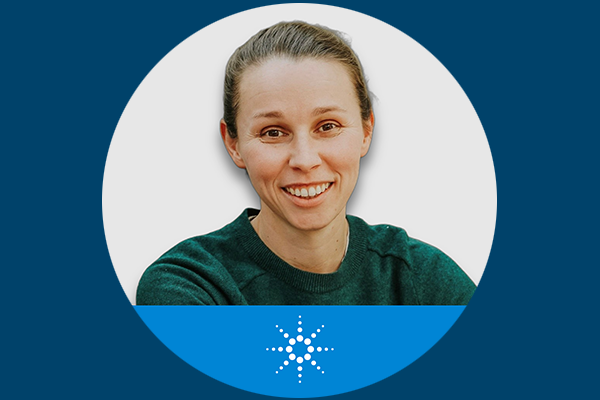
Cate Simmermaker is an LC/MS Applications Engineer with Agilent Technologies working primarily with high-resolution mass spectrometry in small molecule analysis. Cate has worked in applications including metabolomics, food safety, and forensics on Q-TOF and QQQ platforms. She completed her PhD in Chemistry from the University of the Pacific and received a Master’s in Biochemistry from San Francisco State University.
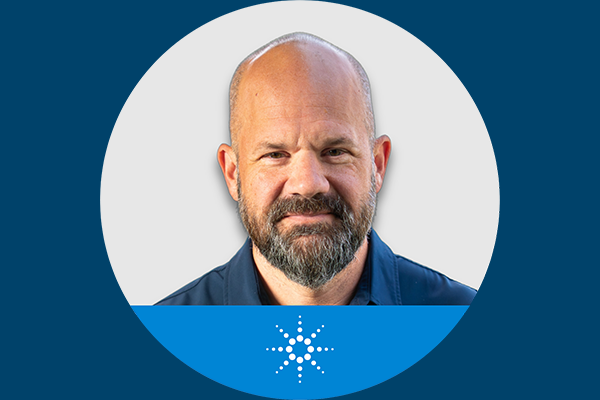
Mark obtained his Ph.D. from Colorado State University, where he used mass spectrometry in his graduate work to characterize glycoproteins from the bacterium Mycobacterium tuberculosis and continued to develop LC/MS methods to profile Mtb lipids in his postdoc. He then joined the Institute for Systems Biology (ISB, Seattle, WA) as a Research Scientist, where he designed a wide range of MS-based techniques to measure metabolites and lipids for diverse projects. Mark joined Agilent in 2012, and since that time has developed a diverse array of targeted and nontargeted mass-spectrometry based metabolomics and lipidomics applications with a focus on complete hardware/software workflows. Here, Mark is excited to apply some of these advancements to the field of drug metabolism.
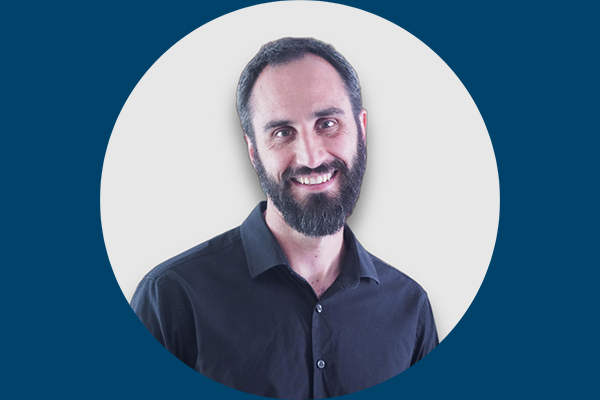
Jeremy Koelmel is an Associate Research Faculty at Yale where he focuses on software and methdologies for non-targeted analysis. He is also CEO of Innovative Omics, where he provides trainings on state-of-the-art lipidomics, PFAS, polymer, and small molecule analysis. He has worked with Agilent for over 15 years on both open-source and vendor software to aid Agilent customers to get the most from their data.
Dr. David A Weil, is a master level scientist working at Agilent Technologies since 2004, located in Sausalito, CA. David’s research is focused on non-targeted data analysis (NTA) using high-resolution mass spectrometry coupled with multidimensional separations techniques (GC, LC, Ion Mobility) and advanced data mining software tools for analysis of small molecules including PFAS in the semiconductor manufacturing industry. David is the Extractable Leachable subject matter expert in Agilent using leveraging his prior experience as technical group leader in the 3M Corporate Analytical Research Laboratories (St. Paul, MN) from 1990-2004 doing drug delivery and transdermal applications. He received his Ph.D. from the University of Minnesota and post-doctoral position at the University of California-Riverside. In 2025, he recently was selected as one of the initial Fellows of the American Society of Mass Spectrometry (ASMS) for his contribution to the society and mass spectrometry community.
In September 2024, a draft guidance on chemical analysis for biocompatibility assessment of medical devices was published by CDRH at FDA that discussed recommendations and best practices for the collection and reporting of chemical characterization data for submission. The guidance discussed a wide variety of topics, from best practices for sample preparation and extraction, optimization of chromatographic separation methods (GC/MS and LC/MS), utilization of 104 compound E/L standard kit to test system performance and stability, best practices for quantitation and semi-quantitation, and also guidance on compound identification process. The publishing of this guidance and a previously published USP stimuli paper sparked our interest to explore optimizing E/L analysis using both GC/MS and LC/MS and factors that impact optimal compound separation as a factor of analysis time.
Using a newly developed CLAP E/L Standards kit from AChemTek, (104 compounds) and we began to explore how the analytical column (chemistry, diameter, length, pore size); organic mobile phase (MeOH, ACN, IPA), buffers (formic acid, ammonium formate), gradients and flow rate all impacted the separations. Using these experimental RT values, we investigate the use of theoretical RT modeling software, with high-resolution mass spectral data (MS and MSMS), downloadable third-party information managed using ChemVista the database management software to improve the identification of suspect and unknown E&L Compounds.
Three different sets of catheters with different polymer compositions and packaging were analyzed using the Gerstel thermal desorption system integrated with an Agilent 7250 GC/Q-TOF. Solvent extracts (Acidic/Basic Water and 50/50 Ethanol/Water) from the different catheters were also analyzed using GC and LC QTOF's (ESI and APCI). The thermal desorption results provided a quick means to identify potential E/L compounds from that were then confirmed being present in extract samples.