Agilent | Trusted AnswersAgilent | Trusted Answers

Eliminate the

Fear Factor
Seminar tour

Eliminate the Fear Factor | Agilent

We're back!

Locations

Click your city to register

St. Louis, MO

31 March and 1 April

Phoenix, AZ

7 and 8 April

Salt Lake City, UT

14 and 15 April

Mobile, AL

21 and 22 April


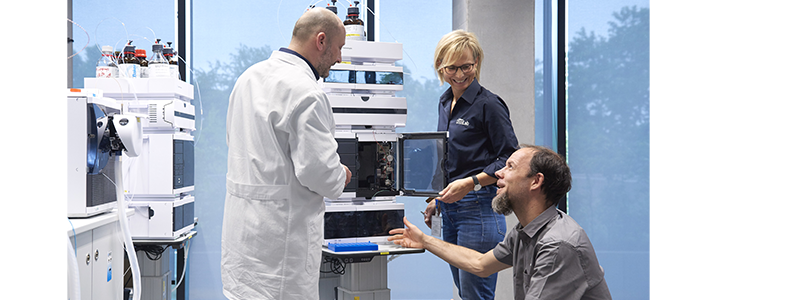
Back by popular demand! This two-day, interactive workshop will focus on key aspects of GC, HPLC, and MS analysis, including service, repair, system familiarization, and practical tips and tricks—all designed to boost your confidence and accelerate your analytical skills. The workshop will feature live demonstrations along with show-and-tell sessions, giving you a closer look at tools, techniques, and workflows that can transform your day-to-day lab operations. To register, choose the tab of your city. 

Participants will learn how to:

  • Eliminate the fear around diagnosing, repairing, maintaining, and optimizing GC, HPLC, and MS workflows
  • Solve common and not-so-common GC, HPLC, and MS technical issues
  • Optimize instrument design and parameters
  • Diagnose chromatography and mass spectrometry issues related to method and application setup
  • Optimize instrumentation and method parameters for optimal separations
  • Access quick and helpful technical support


Don't miss this opportunity to network with your local service engineers and application chemists, allowing you to build direct connections, ask questions, and gain insights into best practices for optimizing your instruments.

Logistics

Each day will run independently, with attendees being able to register for either or both days. When you check in for your seminar, you will be assigned a specific rotation through the three workshop topics. Every attendee will participate in all three workshops.

Agenda

08:00 a.m. – 09:00 a.m. Registration and breakfast
09:00 a.m. – 10:30 a.m. Rotating sessions
10:30 a.m. – 10:45 a.m. Break and transition to next session
10:45 a.m. – 12:15 p.m. Rotating sessions
12:15 p.m. – 01:00 p.m. Lunch with networking opportunity
01:00 p.m. – 02:30 p.m. Rotating sessions

Session details—sign up for one day or both days

Day 1 - GC and GC/MS sessions

Title Overview
Split/Splitless Inlet and FID Design and Troubleshooting
  • Gain an understanding of the fundamental principles and operating modes of split/splitless (SSL) inlets.
  • Develop knowledge of the basic theory behind flame ionization detector (FID) operation.  
  • Acquire insight into how proper GC column installation affects system performance.  
  • Build familiarity with key maintenance, diagnostic, and troubleshooting concepts for SSL inlets and FID detectors.
GC/MS Tuning and Troubleshooting
  • Discuss the tuning process.
  • Optimize acquisition parameters for spectral fidelity and method stability.  
  • Hands-on disassembly and reassembly of an EI source.
  • Best practices for cleaning the source.
From Development to Diagnosis: Overcoming GC/MS Method Challenges
  • Develop logical GC and MS troubleshooting skills.
  • Learn step-by-step processes to diagnose and resolve performance issues.
  • Identify what difficulties to expect when transferring and/or updating methods.

Day 2 - LC and LC/MS sessions

Title Overview
LC/MS Success Essentials: Hands-on Best Practices with Agilent Infinity III and SQ MS 
  • Identify and apply key LC best practices—including proper equilibration, maintenance scheduling, and troubleshooting common errors like high pressure.
  • Build reliable fluidic connections by practicing correct swaging techniques and hands-on valve plumbing with an Agilent Infinity III stack.
  • Perform essential SQ MS cleaning and care—including spray shield cleaning, ion capillary replacement, and best practices for source installation.
  • Use Agilent InfinityLab Assist Hub confidently to monitor system health, access guided diagnostics, and streamline routine maintenance tasks. 
Eliminating the Fear Factor in LC/MS Method Development: Practical Skills for Confident Chromatography 
  • Spot common LC and MS issues such as peak tailing, baseline noise, retention shifts, low signal, high pressure, and unstable spray.
  • Gain the simple troubleshooting tools needed to diagnose and fix problems in both the LC flow path and the MS source.
  • Build hands-on confidence by working through real examples and guided troubleshooting activities. 
Demystifying MS and Ionization Fundamentals 
  • Differentiate major mass spectrometer types (SQ, TQ, TOF) and understand how their capabilities apply to real-world analyses.
  • Explain core ionization principles for both small and large molecules.
  • Understand why ionization efficiency matters and how sources like ESI, APCI, and MMI influence detection.
  • Build confidence in choosing the appropriate source and instrument for specific workflows.