
E&L Testing Essentials: Advanced Analytical Approaches for Extractables & Leachables
 d
d
July 8th, 2026
10AM PST / 1PM EST
When performing extractable and leachable (E&L) studies, there are two aspects of analytical results that are critical to ensure accurate toxicological risk assessment (TRA). The first is the identifications of E&L compounds, which are used to establish compound-specific permitted daily exposures (PDEs). The second is the level E&L compounds are detected, to ensure concentrations are not approaching levels of toxicological concern.
Using proper analytical thresholds and quantitation techniques have been major focus areas within the E&L industry. This has led to the adoption of several important aspects of E&L workflows, such as the application of analytical uncertainty factors (UFs) and relative response databases for quantitation. However, there has been less E&L industry focus on ensuring the accurate identification of unknowns detected in E&L workflows.
This presentation will go through the practical application of industry guidance USP <1663> to ensure proper compound identifications are assigned during E&L screening workflows. Additionally, key aspects of performing structural elucidation of unknown E&L compounds will be covered. Throughout the presentation, insightful examples of structural elucidation will be shown to demonstrate effective approaches for identification of unknown compounds within E&L workflows. This presentation will look to spark industry conversations on the criticality of accurate compound identification in E&L workflows and ways to foster this within the industry.
August 12th, 2026
10AM PST / 1PM EST
In this webinar we will discuss the use of each Agilent GC/MS instrument with respect to E&L applications. Full scan workflows for qualitative and quantitative analyses utilizing either the single, triple quadrupole or the high resolving power Q/ToF. Feature-finding tools, library search and retention indices are all important tools to help with confidence and increase the speed of data analysis. Lastly, we will discuss the use of the triple quadrupole for MRM experiments to detect trace level analytes, e.g. nitrosamines and phthalates.
September 30th, 2026
10AM PST / 1PM EST
In this presentation, detailed operation of ICP-MS will be discussed, particularly the role of elemental analysis by ICP-MS in the Extractable and Leachable analysis. ICP-MS, with its high sensitivity, wide dynamic range, and ultra-trace multi-elemental detection, is the ideal analytical technique for trace elemental quantification in ICH/USP applications.
October 14th, 2026
10AM PST / 1PM EST
Whether targeted or untargeted, extractable and leachable analysis for evaluation of medical devices, drug delivery products, or food contact materials all require accurate and efficient data processing. Join us for a session of tips and tricks to streamline your E&L data analysis from feature finding through identification and quantification.
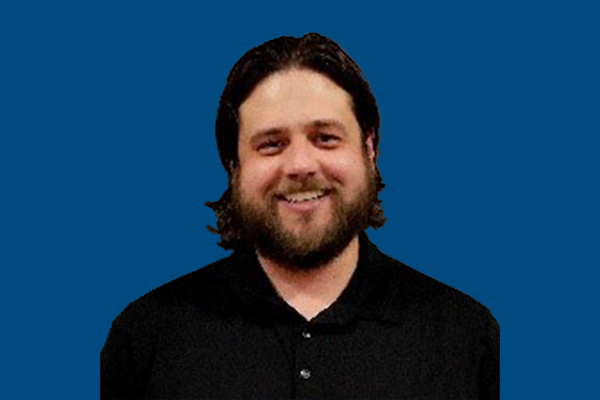
Sam Albeke holds a bachelor's degree in Biochemistry and Biophysics from Oregon State University. Sam started his career as an R&D chemist formulating ink formulationswith the same additives that he now spends his time detecting and identifying in the extractables and leachables industry. Sam has over a decade of industry experienceworking in extractable and leachable testing
Matthew Curtis joined Agilent in 2013 as a GC/MS applications scientist in the Santa Clara, CA Center of Excellence. His primary responsibility is focused on providing instrumentdemos for customer interested in each technology Agilent offers; the GC/MS single quadrupole, triple quadrupole and the quadrupole Time-of-Flight. The variety of different samplessubmitted to the demo lab provide a unique knowledge of optimizing parameters for different applications to provide the best quality data from the instrument.
Yan Cheung joined Agilent Technologies as an Application Chemist after receiving her Ph.D. in Analytical Chemistry from Indiana University Bloomington. Yan hasextensive experience in operating and method development for ICP-MS and ICP-OES. Yan also has years of experience working in the oil and gas industry.
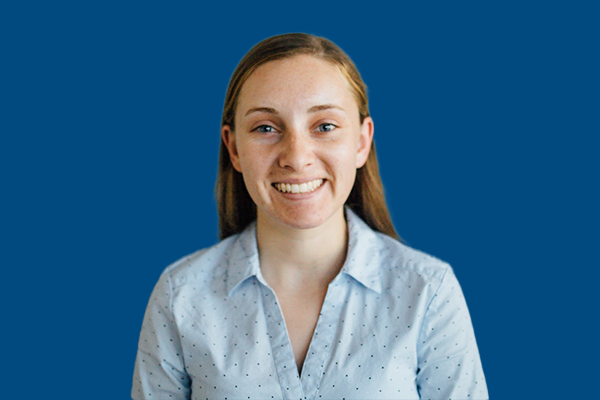
Sierra Durham is an LC/MS Applications Scientist covering LC/QQQ and LC/Q-TOF analysis. Prior to joining Agilent Sierra completed her PhD and postdoc at University ofCalifornia, Davis doing small molecule LC/MS and GC/MS analysis, and earned her bachelor's in Chemistry from Cal Poly San Luis Obispo.
Whether targeted or untargeted, extractable and leachable analysis for evaluation of medical devices, drug delivery products, or food contact materials all require accurate andefficient data processing. Join us for a session of tips and tricks to streamline your E&L data analysis from feature finding through identification and quantification.